Drilling & Blasting Contractor Newcastle for Civil, Quarry, Infrastructure and Renewables

Queensland Drilling & Blasting Services supports Newcastle and Hunter projects where rock excavation needs to be planned, drilled, blasted or broken out in a controlled and practical way.

We work with civil contractors, quarry teams, infrastructure delivery teams, renewable energy contractors, mining rehabilitation projects and project managers who need more than a drill on site. The work needs to be understood properly, set up correctly and delivered in a way that fits the wider programme.

Newcastle and Hunter projects can involve industrial access, quarry production, hard rock excavation, rail and road interfaces, port-related infrastructure, services, staged works, vibration-sensitive areas and tight delivery windows. On larger projects, the pressure may be production, repeatability, clean fragmentation, handover timing and keeping the next crew moving.

That is where experienced drill and blast planning matters.

Need a Newcastle drilling or blasting contractor?
Send the site location, drawings, access details, ground information and programme timing. QDBS can review the scope and help determine the most practical way forward.

Drill and Blast Support for Newcastle Projects

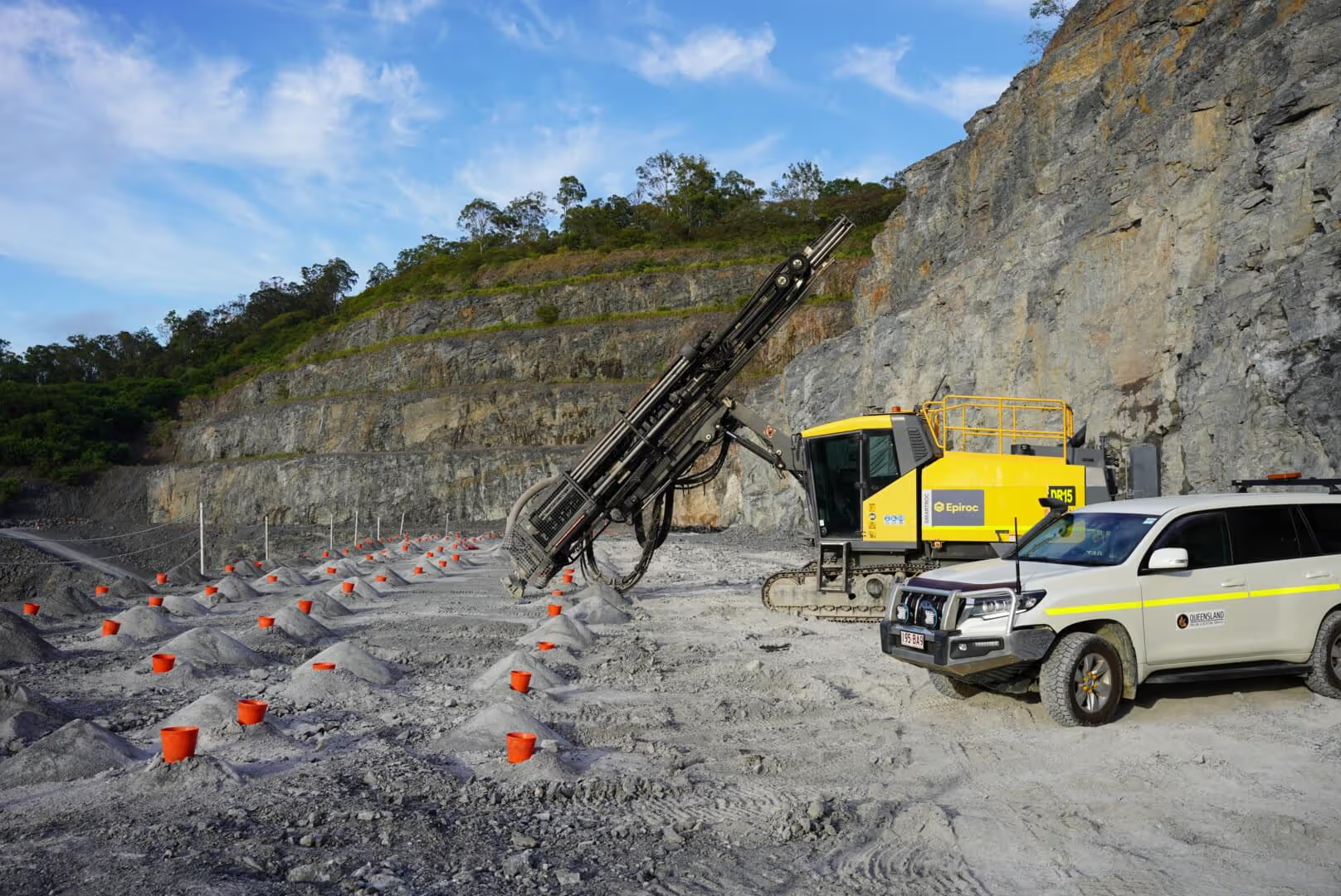
Drilling and blasting in Newcastle is not just about breaking rock. It is about removing rock in a way that suits the site, the excavation sequence, the surrounding constraints and the client’s programme.

For some projects, the priority is production drilling and efficient fragmentation so material can be loaded, hauled and processed without unnecessary delays. For others, the priority is control: limiting overbreak, protecting nearby structures, managing vibration, working near services or keeping the excavation profile clean.

QDBS supports Newcastle and Hunter project teams with drilling and blasting services across:

Civil construction
Quarry operations
Road and infrastructure works
Rail and transport corridors
Industrial and port-related projects
Renewable energy projects
Solar farm drilling
Wind farm drilling
Controlled rock excavation
Hard rock trenching and service corridors
Mining rehabilitation support
Ground support and stabilisation drilling
Probe and test drilling where ground conditions need to be better understood

The correct method depends on the ground, the access, the surrounding risk, the required profile and the programme. A good result starts before the drill rig arrives.
Dashboard mockup
About Us

Why Choose QDBS for Newcastle Works and Projects

Drilling and blasting starts with understanding the required excavation outcome. The blast design, drill pattern, hole depth, burden and spacing all need to align with the ground conditions and the result the client needs.

A typical drill and blast workflow may involve:

Reviewing drawings, site information and constraints
Understanding access, services, structures and exclusion requirements
Planning the drill pattern or drilling method
Drilling holes to the required depth, location and alignment
Checking drilling accuracy and site conditions
Coordinating blast preparation, loading and firing where blasting is required
Managing communication with the site team
Supporting handover, reporting and documentation

The drilling stage has a direct impact on the blast result. Poor collar positioning, inconsistent depths or incorrect hole alignment can affect fragmentation, vibration control, profile control and excavation efficiency.

The blast is only as good as the holes prepared for it.
Trusted by many companies
Sunset with vibrant orange and purple clouds over a barren landscape featuring a white vehicle marked with 'EXPLOSIVES'.

How QDBS Approaches Newcastle Drill and Blast Works

1. Understand the project before committing to the method

The first step is to understand the site and the result required. That includes reviewing the project type, location, drawings, access, ground information, services, nearby structures and timing.

For Newcastle and Hunter work, this matters because conditions can vary heavily between civil sites, quarry environments, industrial areas, infrastructure corridors, mining rehabilitation works and renewable energy projects.

2. Match the drilling method to the site

Different scopes need different methods.

Blast hole drilling may suit production excavation. Line drilling or pre-split drilling may be required where profile control matters. Rock peppering or non-explosive methods may be more suitable where vibration, access or surrounding assets restrict blasting.

The method needs to suit the ground and the project, not just the contractor’s preference.

3. Coordinate with the people running the job

Drilling and blasting affects other parts of the programme. Excavators, loaders, survey, supervisors, shotfirers, engineers, quarry teams and client representatives may all need to work around the sequence.

QDBS focuses on clear communication so the right people know what is happening, what is needed and when the next stage can proceed.

4. Keep documentation and handover clean

Documentation matters on modern projects. Drill plans, blast proposals, mark-ups, blast reports, final drill logs and client sign-off all help keep the work traceable and easier to manage.

Clean documentation also supports invoicing, internal review, project records and future planning.

Drilling and Blasting Services in Newcastle

QDBS provides a range of drilling and blasting services that may be relevant to Newcastle, Hunter and NSW projects.

Production Drill & Blast

Blast Hole Drilling → #blast-hole-drilling
Production Drilling → #production-drilling
Drilling and Blasting (Full Drill & Blast) → #drilling-and-blasting
Explosives Supply & Delivery Support.  → #explosives-delivery

Controlled Rock Excavation
(Precision / Proximity / Profile)

Close Proximity Blasting → #close-proximity-blasting
Line Drilling → #line-drilling
Rock Peppering → #rock-peppering
Trench Drilling → #trench-drilling
Oversized Boulder Drill & Blast → #oversized-boulders
Non-Explosive Rock Removal → #non-explosive
Cased Holes → #cased-holes

Ground Support & Stabilisation

Soil Nailing (Soil Nail Drilling) → #soil-nailing
Rock Drilling → #rock-drilling
Ground Anchor Drilling → #ground-anchors
Micro Pile Drilling → #micro-piles
Weep Hole Drilling → #weep-holes
Pre-Drilled Pile Holes → #pre-drilled-piles

Investigation & Verification

Probe Drilling → #probe-drilling
Test Drilling → #test-drilling
Laser Profiling / Surveying / Bore Tracking / Auditing → #bore-tracking

Renewables & Infrastructure Drilling

Solar Farm Drilling → #solar-drilling
Wind Farm Drilling → #wind-farm-drilling
Post Hole Drilling → #post-hole-drilling
Earth Stake Drilling → #earth-stakes

Newcastle Industries We Service

We work across several project environments, and each one has different constraints across Newcastle, the Hunter and wider NSW.

Civil construction

Roads, rail, subdivisions, industrial sites, staged excavation, service corridors and tight-access works all require careful planning.

Civil drill and blast work is rarely just about production. It is about controlling the excavation outcome while working around access limits, nearby services, other contractors, compliance requirements and programme pressure.

This is where controlled methods matter: proximity controls, clean boundaries, predictable profiles and minimal rework.

Quarries

Quarry production depends on rhythm.

If fragmentation is inconsistent, oversize increases, load times slow down and crushing throughput can suffer. Quarry drilling and blasting is about repeatability, pattern discipline, clean communication and supporting the production cycle.

Good quarry drill and blast work is not about heroics. It is about consistent execution that helps the quarry keep moving.

Mining & rehabilitation

Newcastle and the Hunter have a strong mining and industrial history, which means rehabilitation and supporting works often need disciplined planning, controlled execution and reporting that holds up.

Rehabilitation work can be unforgiving. Ground conditions can be unpredictable, access can be difficult and the required outcome still needs to be controlled.

QDBS supports drilling and blasting works where safety, documentation, communication and reliable field execution are critical.

Renewables

Solar farms, wind farms and renewable infrastructure projects are often driven by volume, logistics and programme timing.

The challenge is not only drilling the holes. It is managing access, set-out, rig movement, ground variability, crew coordination and uptime across large project areas.

On renewable energy projects, drilling needs to support the construction programme instead of becoming the bottleneck.

Infrastructure

Infrastructure work often involves complex constraints: staging, profile control, nearby assets, compliance requirements and coordination across multiple stakeholders.

Newcastle and Hunter infrastructure projects may involve industrial areas, transport routes, road works, rail interfaces, service corridors and hard rock excavation near existing assets.

The difference on these projects is disciplined execution and communication, not just drilling output.

Industrial and Port-Related Works

Industrial and port-related environments often require careful access planning, communication and coordination with other contractors, operators and site representatives.

The work may involve hard rock excavation, service corridors, foundation support, trenching, controlled drilling or excavation support around live operations.

QDBS helps project teams plan drilling and blasting works around the site conditions, access requirements, programme and handover expectations.
Support

Common Questions About Drilling and Blasting in Newcastle

Everything you need to know about Drill & Blast in Newcastle.
Can QDBS help with rock excavation where blasting is restricted?
Yes. Where blasting is restricted or unsuitable, drilling may still support controlled rock removal through methods such as line drilling, rock peppering, pre-splitting or non-explosive rock removal support. The right method depends on the site conditions, constraints and required outcome.
Why does drilling accuracy matter in blast work?
Drilling accuracy affects the blast result. Hole depth, collar position, alignment, burden and spacing all influence fragmentation, vibration control, overbreak and excavation efficiency. Poor drilling can create problems later in loading, crushing, trimming or handover.
Can QDBS support quarry drilling near Newcastle?
Yes. QDBS can support quarry-related drilling and blasting where the focus is on repeatable production, consistent hole quality, fragmentation, bench preparation and coordination with quarry operations.
Can QDBS help during the planning stage?
Yes. Early involvement can help identify access issues, method options, vibration-sensitive constraints, documentation requirements and likely sequencing before the project is under pressure.