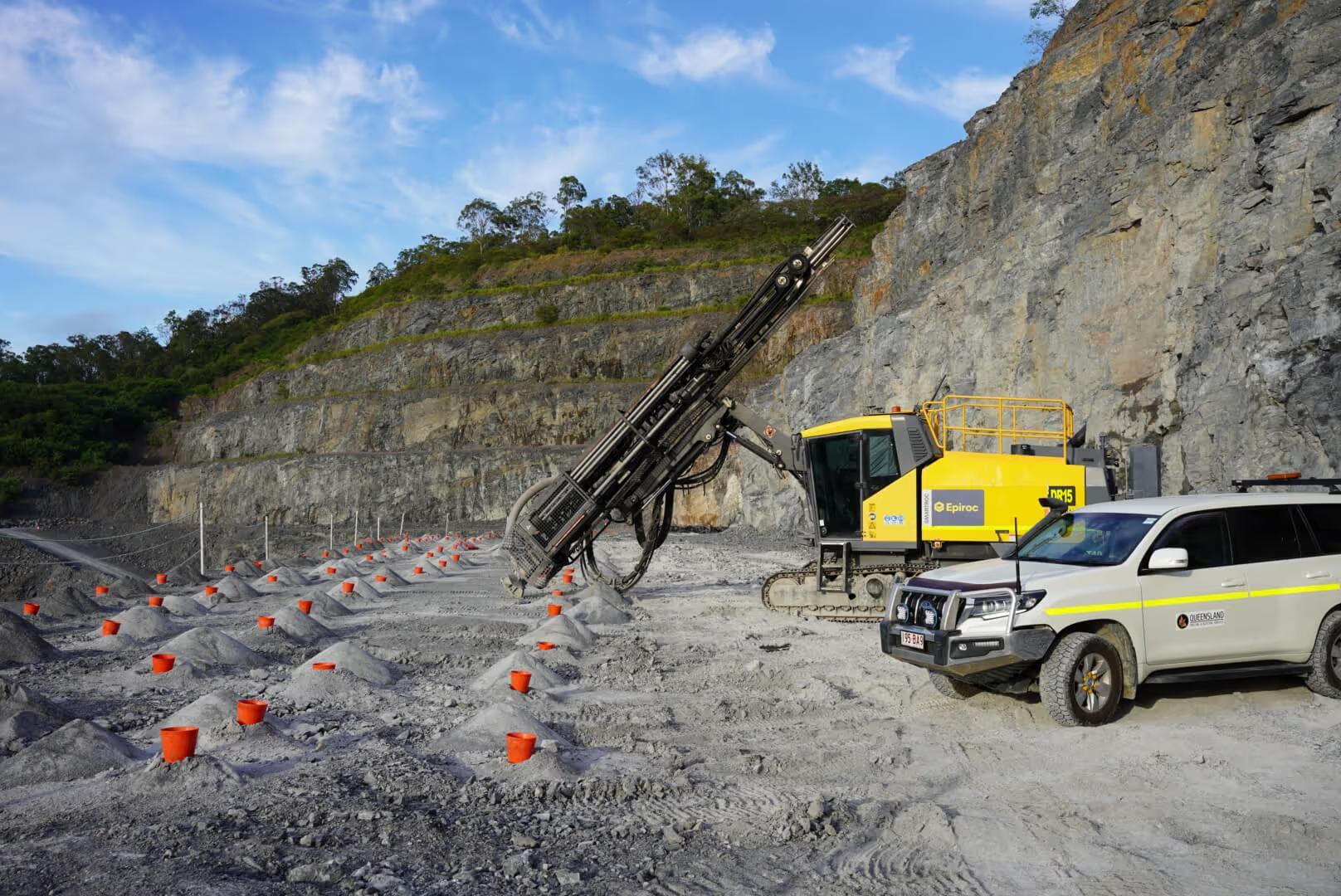
Drilling Contractor Port Lincoln for Civil, Quarry, Port, Infrastructure and Renewable Energy Projects

Queensland Drilling & Blasting Services supports projects throughout Port Lincoln, the Lower Eyre Peninsula and surrounding South Australian regions where rock needs to be drilled, blasted, stabilised or excavated safely and efficiently.

We work with civil contractors, quarry operators, infrastructure contractors, port and industrial project teams, renewable energy developers, agricultural contractors and principal contractors that need more than a drill rig on site.

The ground conditions, excavation design, access requirements and surrounding assets all need to be understood before drilling begins. The work must then be completed accurately so the drilling supports the required blast result, excavation profile and wider construction programme.

Drill and Blast Support for Port Lincoln Projects

Drilling and blasting in Port Lincoln is not simply about breaking rock.

It is about producing a controlled excavation outcome that suits the ground, the site constraints and the client’s next stage of work.

On a quarry project, the priority may be consistent fragmentation, reduced oversize, manageable muckpile movement and efficient loading and crushing.

On a civil, port or infrastructure project, the priority may be controlling overbreak, maintaining the excavation profile, protecting nearby structures, managing vibration or working around live services and operating facilities.

QDBS supports Port Lincoln and Lower Eyre Peninsula projects across:

Civil construction
Quarry production
Road construction and upgrades
Port-related civil works
Industrial site preparation
Marine infrastructure support works
Hard-rock platform excavation
Agricultural infrastructure
Grain and bulk-handling infrastructure
Renewable energy projects
Solar farm drilling
Wind farm drilling
Transmission infrastructure
Hard-rock trenching
Drainage and utility works
Service corridors
Regional access roads
Controlled rock excavation
Close-proximity blasting
Ground support and stabilisation drilling
Probe and test drilling
Oversized boulder drilling and blasting
Regional infrastructure works
Rehabilitation and remediation works

The correct drilling or blasting method depends on the geology, excavation geometry, required profile, surrounding risks, available access and how the broken material will be excavated or processed.

A successful result starts before the drill rig arrives.
Dashboard mockup
About Us

Why Choose QDBS for Port Lincoln Works and Projects

Port Lincoln projects can present a different combination of conditions from metropolitan civil works or an open regional quarry.

The drilling area may be located near a road, wharf, bulk-handling facility, marina precinct, processing site, industrial building, service corridor, residential boundary or environmentally sensitive coastal area.

The work may also form part of a broader construction programme, quarry production cycle, infrastructure upgrade, agricultural development or renewable energy project.

This means drilling performance cannot be measured only by metres drilled.

Drilling and blasting starts with understanding the required excavation outcome.

The blast design, hole diameter, bench height, burden, spacing, subdrill, stemming and initiation sequence all need to suit the ground conditions and the result the client requires.

The drilling operation must then reproduce the design accurately in the ground.

A typical drill and blast workflow may involve:

Reviewing drawings, specifications and survey information
Understanding access and site operating requirements
Identifying nearby structures, services and sensitive areas
Confirming exclusion-zone and blast-clearance requirements
Checking drill access and work-area conditions
Planning the drill pattern or drilling method
Setting out or confirming hole locations
Drilling holes to the required depth and alignment
Recording actual depths and ground conditions
Identifying water, cavities, fractured ground or unstable holes
Inspecting completed holes before blast preparation
Coordinating blast loading and firing
Communicating with the client and site team
Completing blast reports, drill logs and handover records

The drilling stage has a direct effect on the blast result.
Trusted by many companies
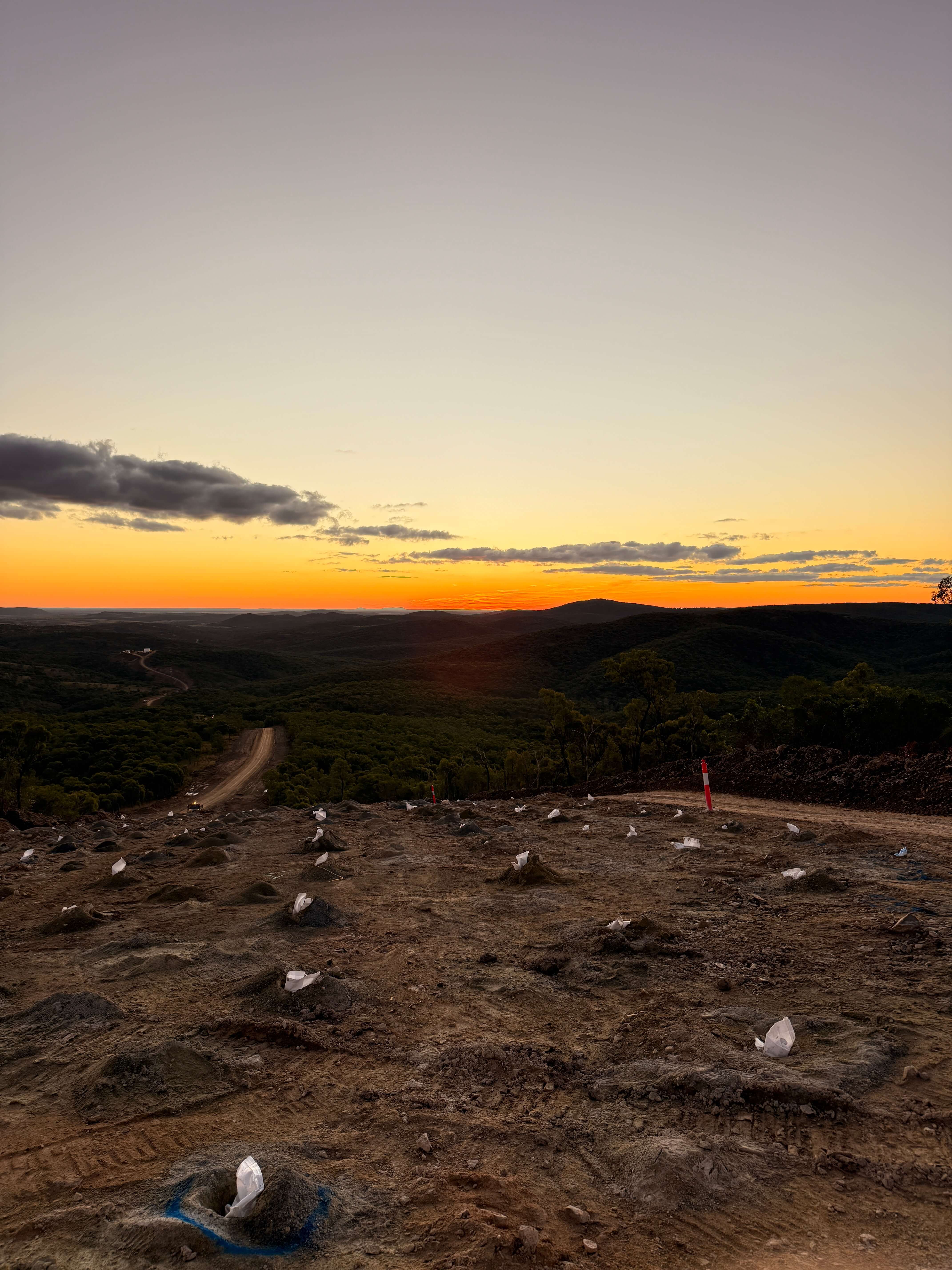
Sunset with vibrant orange and purple clouds over a barren landscape featuring a white vehicle marked with 'EXPLOSIVES'.

How QDBS Approaches Port Lincoln Drill and Blast Works

1. Understand the required excavation result

The first question is not simply how many holes need to be drilled.

The first question is what the client needs the excavation to achieve.

Understanding the required outcome allows the drilling method, equipment and work sequence to be selected around the project rather than applying the same approach to every site.

2. Match the drilling method to the ground conditions

Not every hard-rock excavation should be approached in the same way.

Competent rock may require a different drilling setup from weathered, fractured or highly variable material.

Ground containing soft seams, cavities, water or broken zones can affect penetration rates, hole stability, drilling accuracy and the final condition of the hole.

Coastal sites can introduce additional considerations. Water ingress, salt exposure, limited working areas and nearby marine assets may affect equipment positioning, hole preparation and the sequence of work.

3. Coordinate with the people running the project

Drilling and blasting affects the activities that come before and after it.

Access windows, exclusion areas, equipment movements, operating facilities, public roads, nearby properties and other contractors can all affect when drilling or blasting can proceed.

QDBS focuses on clear communication so the client knows what needs to be ready, what conditions have been encountered and when the next stage of work can begin.

4. Maintain drilling QA and clean documentation

Accurate documentation supports better blast results and better project control.

Project records should reflect what was actually completed in the field, not only what was shown on the original drawing.

This is particularly important when ground conditions change, water is encountered, holes collapse, depths are adjusted or sections of the pattern require redrilling.

Clean documentation helps the client review completed work, maintain compliance records, assess blast performance and plan future drilling campaigns.

Drilling and Blasting Services in Port Lincoln

QDBS provides drilling, blasting, controlled rock excavation and specialist drilling services for suitable projects throughout Port Lincoln, the Lower Eyre Peninsula and wider South Australia.

Production Drill & Blast

Blast Hole Drilling → #blast-hole-drilling
Production Drilling → #production-drilling
Drilling and Blasting (Full Drill & Blast) → #drilling-and-blasting
Explosives Supply & Delivery Support.  → #explosives-delivery

Controlled Rock Excavation
(Precision / Proximity / Profile)

Close Proximity Blasting → #close-proximity-blasting
Line Drilling → #line-drilling
Rock Peppering → #rock-peppering
Trench Drilling → #trench-drilling
Oversized Boulder Drill & Blast → #oversized-boulders
Non-Explosive Rock Removal → #non-explosive
Cased Holes → #cased-holes

Ground Support & Stabilisation

Soil Nailing (Soil Nail Drilling) → #soil-nailing
Rock Drilling → #rock-drilling
Ground Anchor Drilling → #ground-anchors
Micro Pile Drilling → #micro-piles
Weep Hole Drilling → #weep-holes
Pre-Drilled Pile Holes → #pre-drilled-piles

Investigation & Verification

Probe Drilling → #probe-drilling
Test Drilling → #test-drilling
Laser Profiling / Surveying / Bore Tracking / Auditing → #bore-tracking

Renewables & Infrastructure Drilling

Solar Farm Drilling → #solar-drilling
Wind Farm Drilling → #wind-farm-drilling
Post Hole Drilling → #post-hole-drilling
Earth Stake Drilling → #earth-stakes

Port Lincoln Industries We Service

We work across several project environments throughout Port Lincoln, the Lower Eyre Peninsula and surrounding South Australian regions.

Each environment has different production requirements, access constraints and drilling risks.

Civil construction

Civil projects around Port Lincoln may involve road cuttings, drainage, service trenches, building platforms, retaining structures, foundations, subdivisions and regional infrastructure.

The drilling or blasting method needs to fit the excavation sequence.

A large open excavation may suit production drilling and blasting. A narrow trench, final wall or excavation beside an existing asset may require a more controlled method.

Controlled excavation may require smaller patterns, reduced charge weights, staged firing, line drilling or alternative rock-removal methods.

Selecting the correct method can reduce overbreak, improve the excavation profile and help keep following trades moving.

Quarries

Quarry production depends on consistency.

The drilling pattern needs to support the required fragmentation, muckpile movement, excavator performance and crushing process.

The condition of the quarry face and bench also matters.

Loose material, poor edge definition, uneven surfaces and restricted rig access can affect set-out accuracy and drilling safety. Work areas should be prepared so the rig can be positioned correctly and each hole can be drilled as close as practicable to the design.

Good quarry drill and blast work is based on repeatability, accurate field information and continuous improvement.

Port, Marine and Coastal Infrastructure

Port Lincoln’s harbour and coastal facilities support commercial shipping, grain exports, petroleum supply, fishing vessels and wider regional industry. Port and coastal project environments can therefore involve operating infrastructure, restricted access and close coordination with facility operators.

These sites require careful consideration of the surrounding structures and operations.

The objective is to complete the excavation without creating unnecessary risk to the infrastructure or operations around it.

Renewable Energy and Hydrogen-Linked Infrastructure

Renewable energy and transmission projects can require drilling for:

Wind turbine infrastructure
Solar farm infrastructure
Posts and earth stakes
Transmission towers
Service corridors
Cable trenches
Substations
Access roads
Equipment platforms
Drainage
Ground anchors
Hard-rock excavation

Large energy projects may contain hundreds or thousands of repeated drilling locations.

Performance depends on accurate set-out, efficient rig movement, reliable equipment and a drilling method that can respond to changing ground conditions across the project area.

A post, stake or foundation hole must be drilled to suit the installation requirement—not simply completed as quickly as possible

The challenge is not only drilling each hole.

It is maintaining productivity and hole quality across a large work front without allowing drilling to delay the broader construction programme.

Agriculture and Bulk-Handling Infrastructure

Agriculture remains an important part of the Lower Eyre Peninsula economy, with Port Lincoln serving as an export point for regional grain and other agricultural commodities.

These projects may be undertaken within operating facilities where access and timing need to be coordinated around truck movements, harvesting periods, loading programmes and existing plant.

The drilling scope should be planned around the wider facility requirements.

Clear planning helps prevent drilling from interfering with operating schedules or becoming a bottleneck for the next stage of construction.

Regional and Remote Infrastructure

Projects outside Port Lincoln can involve long mobilisation distances, unsealed access and limited local support.

Regional scopes may include:

Quarry sites
Water infrastructure
Transmission projects
Regional road upgrades
Drainage
Hardstands
Service trenches
Renewable energy sites
Agricultural facilities
Remote industrial sites
Coastal infrastructure
Rehabilitation projects

These projects need to be planned properly before mobilisation.

The mobilisation plan should also account for the size and weight of the drilling equipment.

Access roads, gates, culverts, turning areas, overhead restrictions, ground bearing capacity and unloading areas may all affect whether the rig can reach the drilling location safely.
Support

Common Questions About Drilling and Blasting in Port Lincoln

Do you provide drilling and blasting services in Port Lincoln?
Yes. QDBS supports suitable drilling, blasting and controlled rock excavation projects throughout Port Lincoln, the Lower Eyre Peninsula and other South Australian locations.

Mobilisation depends on the project size, location, access, programme and scope.

Send the site location, drawings, estimated quantities and required timing so the team can review the enquiry properly.
What types of Port Lincoln projects need drill and blast support?
Drilling and blasting may be required for:

Quarry production
Civil excavation
Road construction
Port-related infrastructure
Hard-rock foundations
Industrial upgrades
Service trenches
Drainage
Agricultural infrastructure
Bulk-handling facilities
Renewable energy projects
Transmission infrastructure
Ground stabilisation
Oversized rock
Rehabilitation works
Controlled excavation near existing assets

The correct method depends on the ground conditions, required profile, surrounding risks and the intended use of the broken material.
Can QDBS work near existing structures and services?
Yes, where the project conditions and risk controls allow the work to be completed safely.

Projects near structures, services or operating facilities may require a controlled drilling or rock-removal method rather than a conventional production blast.

The project team may need to consider:

Separation distance
Structure condition
Service locations
Vibration limits
Airblast
Flyrock controls
Excavation boundaries
Exclusion zones
Available working room
Alternative methods

Drawings, service information, photographs and site-specific requirements should be provided so the proposed method can be reviewed properly.
Can QDBS support renewable energy and transmission projects?
Yes. QDBS can support renewable energy and infrastructure projects requiring hard-rock drilling, trench drilling, post-hole drilling, earth-stake drilling, controlled blasting, foundation drilling or excavation support.

The correct method depends on the required hole dimensions, installation tolerances, ground conditions, rig access and production requirements.

Port Lincoln and Lower Eyre Peninsula Service Area

QDBS supports suitable projects throughout Port Lincoln, the Lower Eyre Peninsula and surrounding South Australian project areas.
Project locations include:
Port Lincoln
Boston
Kirton Point
Lincoln Cove
North Shields
Poonindie
Green Patch
Wanilla
Koppio
Coffin Bay
Wangary
Coulta
Cummins
Tumby Bay
Louth Bay
Ungarra
Lock
Cleve
Cowell
Lower Eyre Peninsula
Southern Eyre Peninsula
Lincoln Highway corridor projects
Tod Highway corridor projects
Port Lincoln industrial project areas
Port and marina infrastructure areas
Quarry and material-production sites
Regional road projects
Agricultural infrastructure projects
Renewable energy project areas
Transmission infrastructure projects
Coastal infrastructure projects
Regional civil and heavy infrastructure projects

For larger projects, mobilisation to other Eyre Peninsula and South Australian locations can be discussed based on the project size, programme, access conditions and support requirements.